Life Is Like A Play
A first-timer ran the show
The agenda listed Stella as TME. On the night, Stella decided to hand the role to Cecilia, who had joined the club exactly one week earlier, and moved herself to General Evaluator.
It worked. Several officers only found out halfway through that the host was a new member; Tao asked the officers’ chat whether she was. Afterwards Danny guessed she must have hosting experience, and Stella said she was nothing like a newbie. Cecilia’s own account: her only experience was one company annual party. Her plan had been to read the agenda word for word and make no mistakes, but as the speeches went on she started adding her own bridges between them. When Andy lost his place mid-speech, she summarised his story and carried the room into the next segment, which he thanked her for the next morning. She also admitted that the moment she made eye contact with the audience, her nerve went.
She was voted Best Host. Her Ice Breaker is scheduled for October.
Evaluating from the floor
By Tuesday morning, the three speech-evaluator slots were still empty. Tina suggested the three speakers evaluate each other. Mini, the Meeting Manager, said she had been thinking the same. Tao proposed a pooled segment where anyone could give feedback. Danny offered a variant he had seen elsewhere: after each speech, the speaker stays on stage for three minutes and the audience gives open feedback. Christy asked whether this was a group job interview.
Mini put it to a vote: option A, a ten-minute open segment at the end; option B, three minutes of feedback right after each speech. B won. There was no time left to change the printed agenda, so the meeting ran option B off-script.
In practice it worked like an interview. Andy had one official evaluator, Tracy. Tao and Danny stayed at the front and took questions from the audience. Stella, as General Evaluator, was voted Best Evaluator.
Prepared speeches
Tao, “Cross the Line” (read the manuscript). A former by-the-book driver who once scolded his wife for crossing a solid line (“Everyone does it.” “That doesn’t make it right.”) ends up crossing one himself at a badly designed intersection, and hears his own sentence thrown back at him. He closed with two questions for the room: am I following the rules, and are these rules working? In the interview, the audience asked whether his risk-taking depends on who is in the passenger seat. It does: if it is Jason, he goes.
Andy had two days to prepare “How to Win-Win?” and had written more than he could memorise. He learned the first story on the way to the meeting and planned to glance at his phone for the second. When the words ran out, he joked his way through it and pulled out the phone. Christy said that was the part she liked best. Stella said the speech got better as it went: the first story was a little stiff, the second was smooth and funny. The second story, about a money negotiation at home that did not go the way he planned, had the room laughing hard enough that Tracy forgot evaluations were coming. Tracy, his evaluator, was unwell that night and could not finish; she wrote to him the next morning that he juggles work and family and still keeps showing up to speak and take roles. Danny called him the natural stand-up comic of the three. Andy’s own view: “As long as I’m not embarrassed, the embarrassment belongs to someone else.”
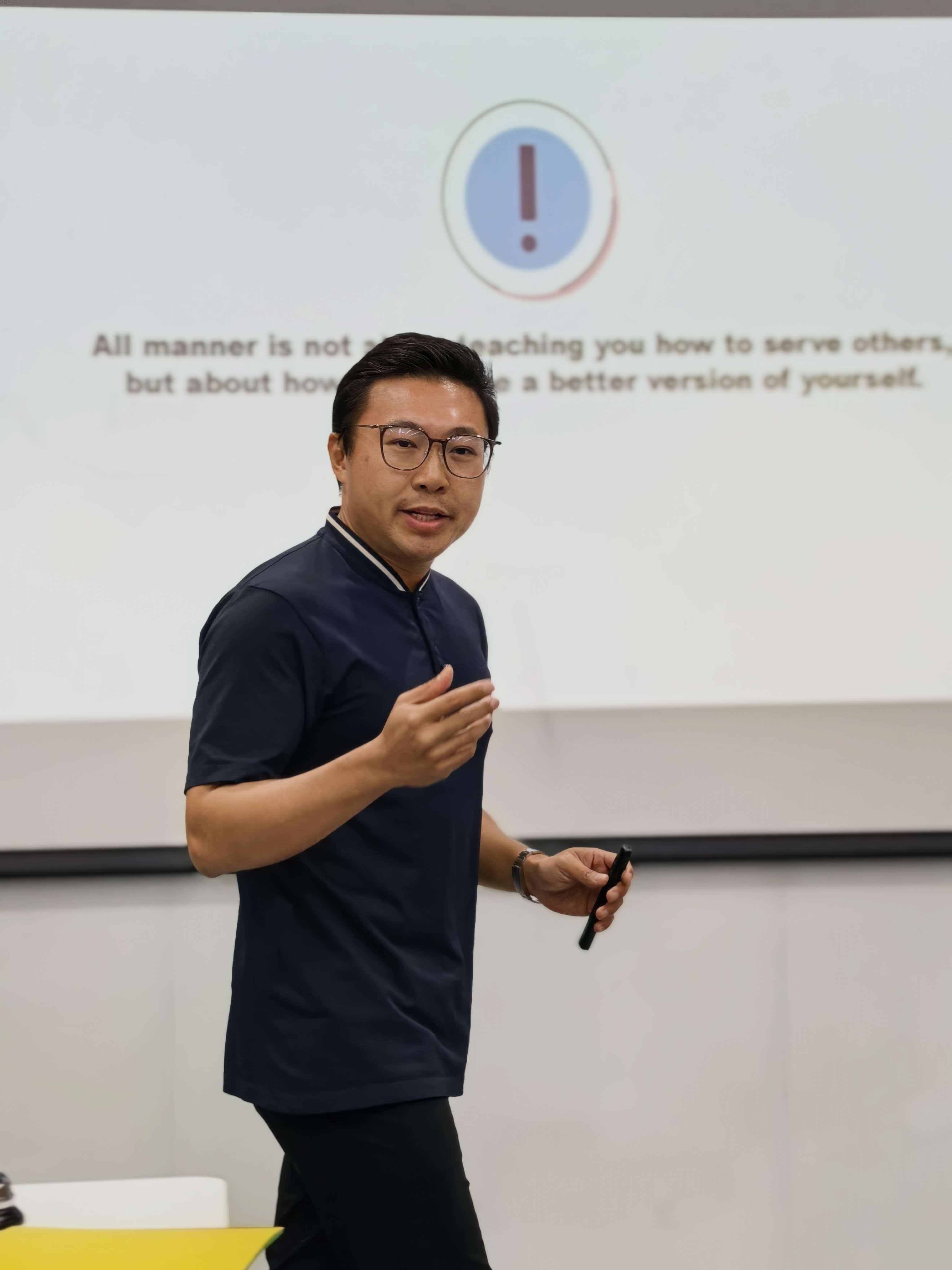
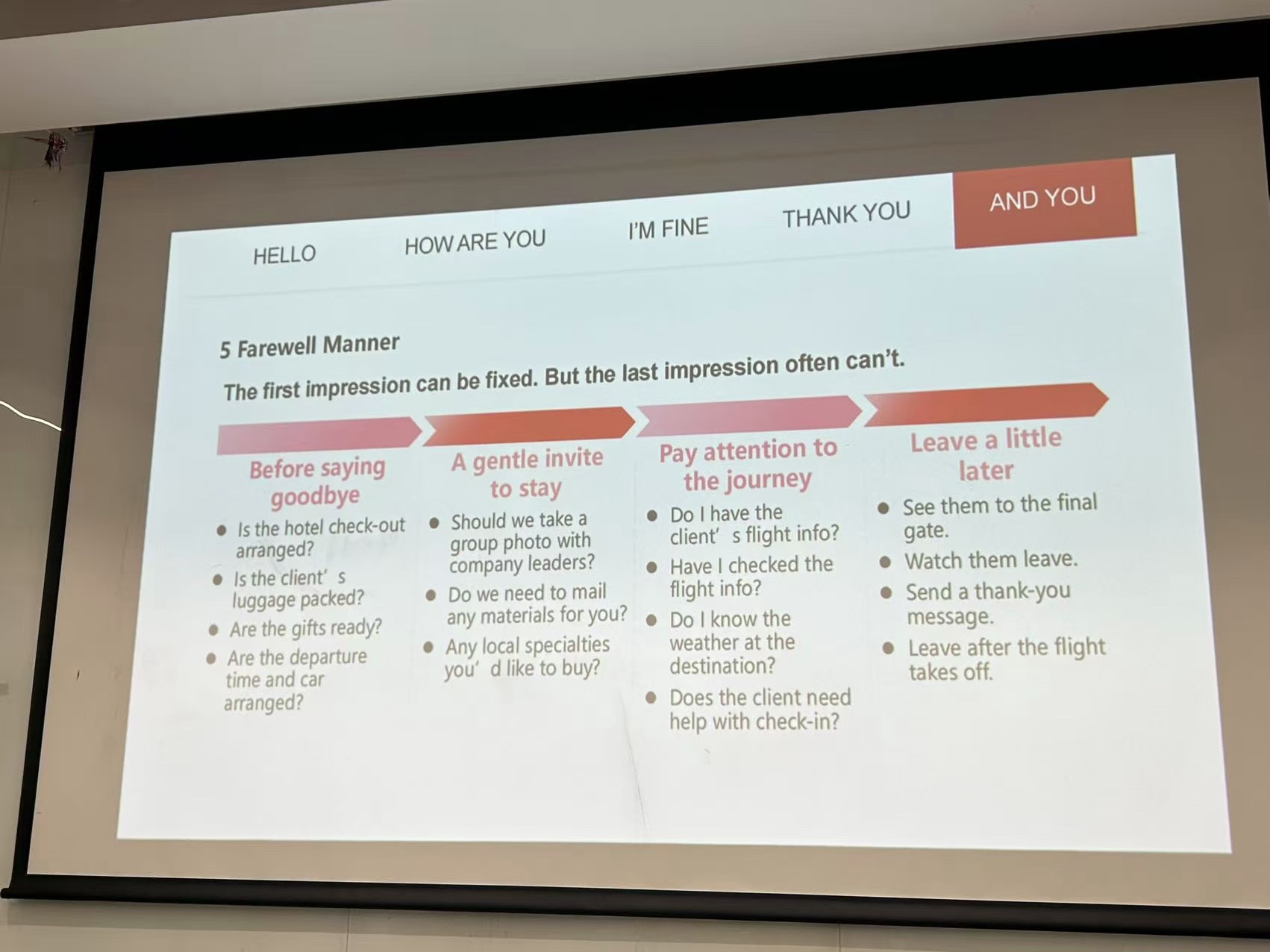
Danny gave a twenty-minute business etiquette workshop for his Dynamic Leadership Level 5 project (slides). He built it on the first English dialogue every Chinese student learns: “Hello. How are you? I’m fine, thank you. And you?” Each line became a stage of hosting a client: greeting, caring, presenting yourself, respect and gratitude, and staying connected. As Danny put it afterwards, the five parts are not only a complete conversation, but also a complete mindset for business manners.
A fictional assistant called Tony got every stage wrong. He was late to the airport, handed over a crumpled business card, left the client waiting in the hotel lobby, sat in the wrong row at the meeting, and took twenty minutes to order dinner. Each mistake led into Danny’s checklist for doing it right. The farewell section opened with “The first impression can be fixed. But the last impression often can’t.”
Business cards got the most time. Danny opened with Joe Girard, whom Guinness World Records recognised as the world’s most successful salesman: 13,001 Chevrolets in fifteen years, all sold one-on-one. His line: “The only product you sell in your entire life is yourself.” Danny had expected the name to ring a bell in the room. It did not. Eight rules for giving and receiving a card followed, summed up as: “What you hand over is a card, but also yourself. What you receive is a card, but also respect.”
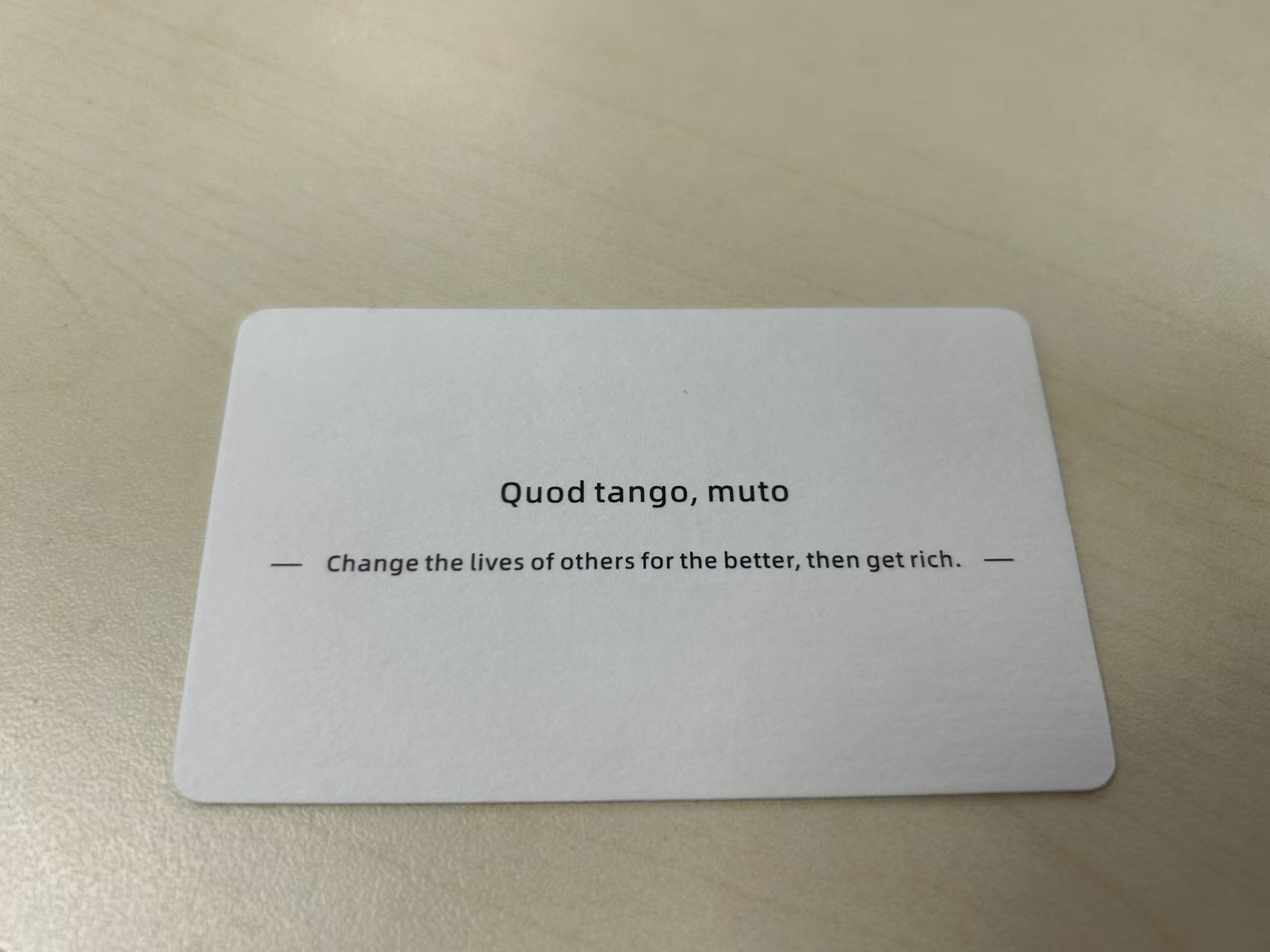
Then he handed out his own card. The front carries one line in Latin, “Quod tango, muto” (what I touch, I change), and under it: “Change the lives of others for the better, then get rich.” The next morning Christy said the line had real depth.
He had rehearsed it several times at home and came in under twenty minutes every time; live, he ran slightly over, which he blamed on the room being too good an audience. His method, when Tao asked: read the script aloud once, finalise it, then memorise it. In the interview, the questions kept coming back to his English, and his answer about how it got so good was delivered at a speed Cecilia described as taking off. He was voted Best Speaker.
All three speakers that night were men, which Stella pointed out that morning. Danny replied by offering himself as numbers 6666, 8888 and 9999 at the audience’s service.
Table Topics: Life Is Like A Play
Anna turned Table Topics into acting. Four speakers each got a slide with an emotion, a scene and a first line they had to open with. “Joy: The Unexpected Prize” put you at a company annual meeting, halfway through dessert, when the CEO reads out the grand-prize winner, and you had to begin with “Wait… did you just say MY name?” “Fear: Midnight, Alone” had you walking home from a late shift with 1% battery and footsteps behind you, opening with “It’s fine. It’s just a shadow… right?” The four who took the stage were Daisy, Tracy, Tina and Winston.
Daisy, a guest, drew Fear, and turned it around. Instead of playing the victim, she took control of the scene and stayed calm, and by the end it was the criminal who should have been afraid. Jason’s verdict: Hong Kong women are tough, Guangxi women are tougher. She won Best Table Topics.
Tina’s story was full of detail, including a hiking fall and a trip to hospital, and Andy somehow ended up in it. Stella wondered whether it had really happened. Danny said he wanted to turn to Andy and ask what he had done. Tina’s reply the next day: she does not like hiking, she made it all up, and Andy was only in the story because he was sitting where she could see him. Tao said he would stop sitting in the corner.
The photographer
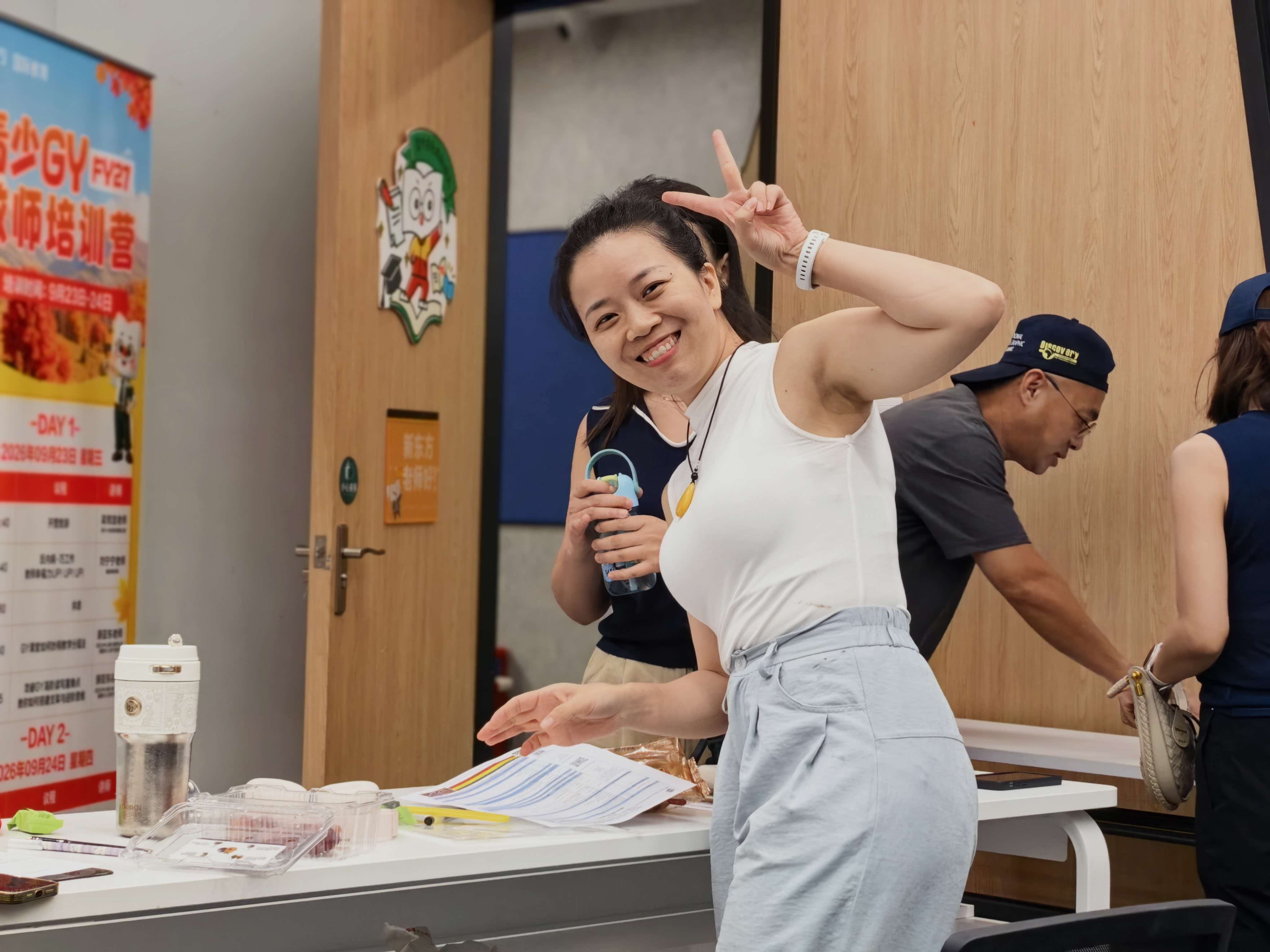
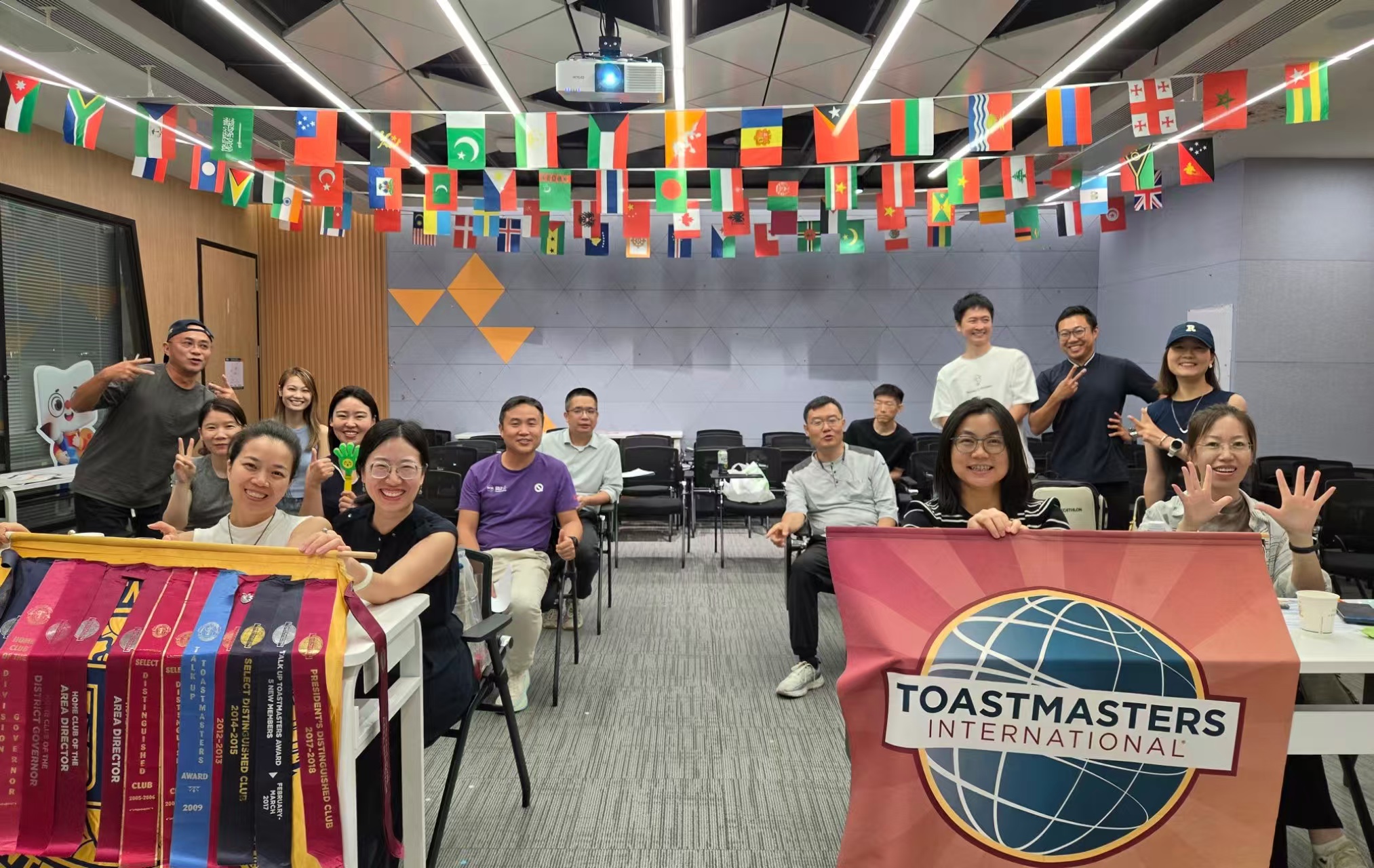
Winston, a guest, took the On-Camera role. By 20:14, before the meeting was over, he had already posted twenty-four photos in the group with a note: pick the one you like best, and if you are torn between two, just pick one. Kingsley said the photographer tonight was very advanced. Later Winston added a set of deliberately goofy shots, starting with one of Jason. Most of the photos on this page are his. He shared Best Facilitator with Christy, the Timer.
Who was there
Four guests: Lorrence, Winston, Han and Daisy. Han, who first came the week before, took the Hark Master role this time. Susie, Rebecca and Camellia could not make it. Rebecca asked for a recording so she would not miss the speeches.